[
contact us
]
Career→
01WHAT MAKES US DIFFERENT
WE BUILD THE WHOLE MACHINE.
From mechanics and hardware to software, motion, and intelligence: We develop every layer of Physical AI together.
02HOW WE THINK ABOUT IT
BUILT AS A PLATFORM.
Published interfaces, documented torque envelopes, parts you can order. We build the body and leave the last decision to whoever puts their stack on top.
03OUR HUMANOID
THE PROOF IS PHYSICAL.
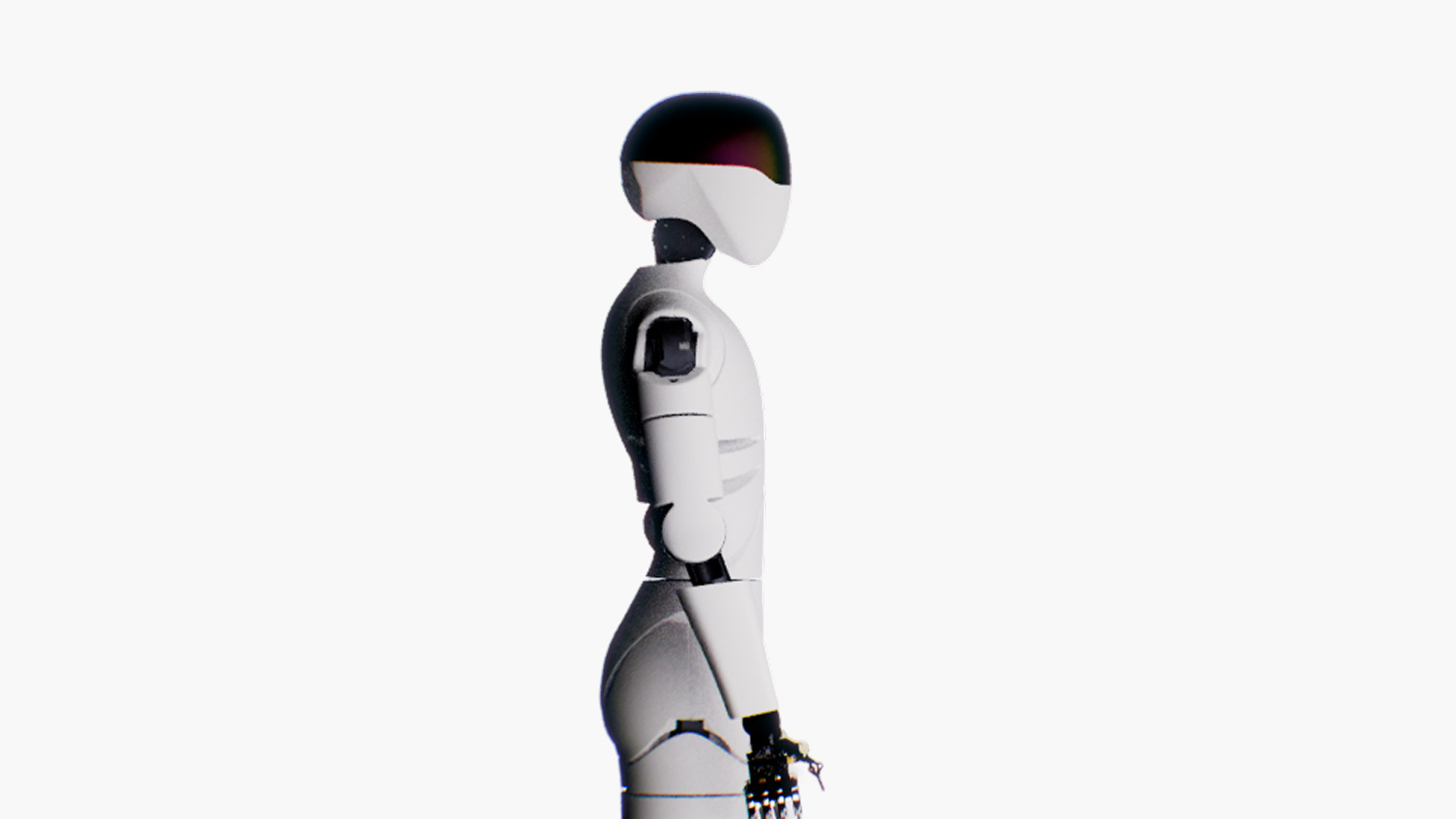
Our own humanoid robot is where everything comes together. Because the future of robotics isn’t promised. It’s engineered, tested, and built.
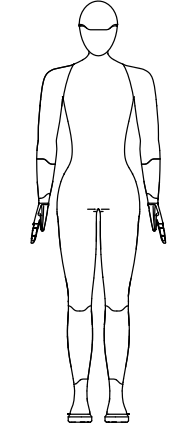
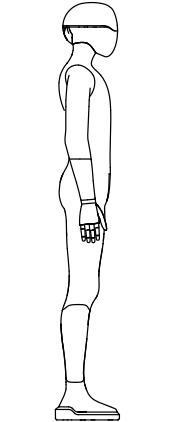
165 CMSIZE
30 KGWEIGHT
5 KGPAYLOAD
29DOF
6 HRSBATTERY
1 HRCHARGE
2 M/SSPEED
2070 TFLOPSAI
01 SIZE
—
OPEN SPECSHEET

We built the full stack of physical AI.

Every layer of Physical AI.

From single parts to one motion.

EVERY DESIGN DESICION MATTERS
01

At the core of every Cell Labs robot lies a custom-designed PCB, engineered for reliability, efficiency, and the demands of real-world robotics. Every trace, every component placed with purpose.

PERCEPTION UNIT

PASSIVE SAFETY

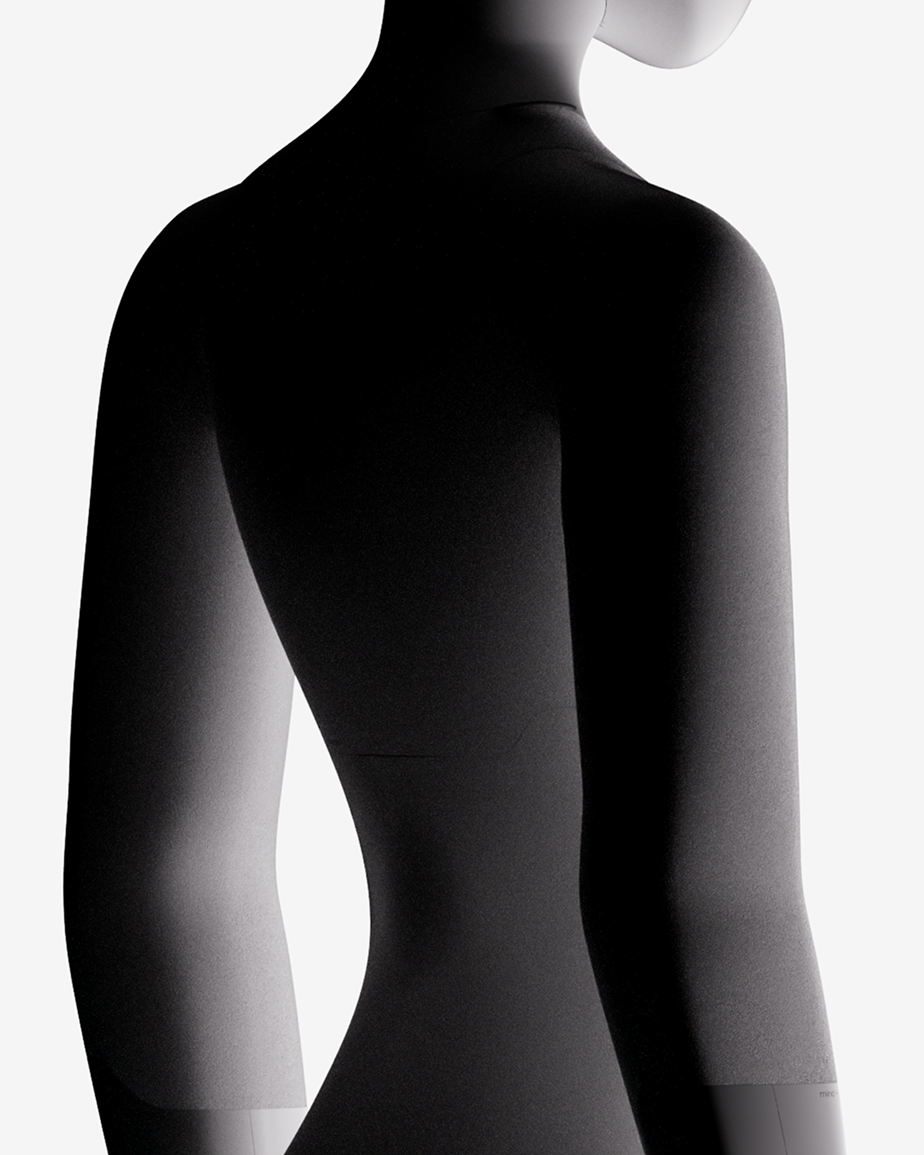
From hardware to software, safety is built into the system from the start. A lightweight construction reduces the impact of unexpected falls, while a soft foam layer helps protect people during close interaction. The textile outer layer adds another protective barrier around moving joints and mechanisms.
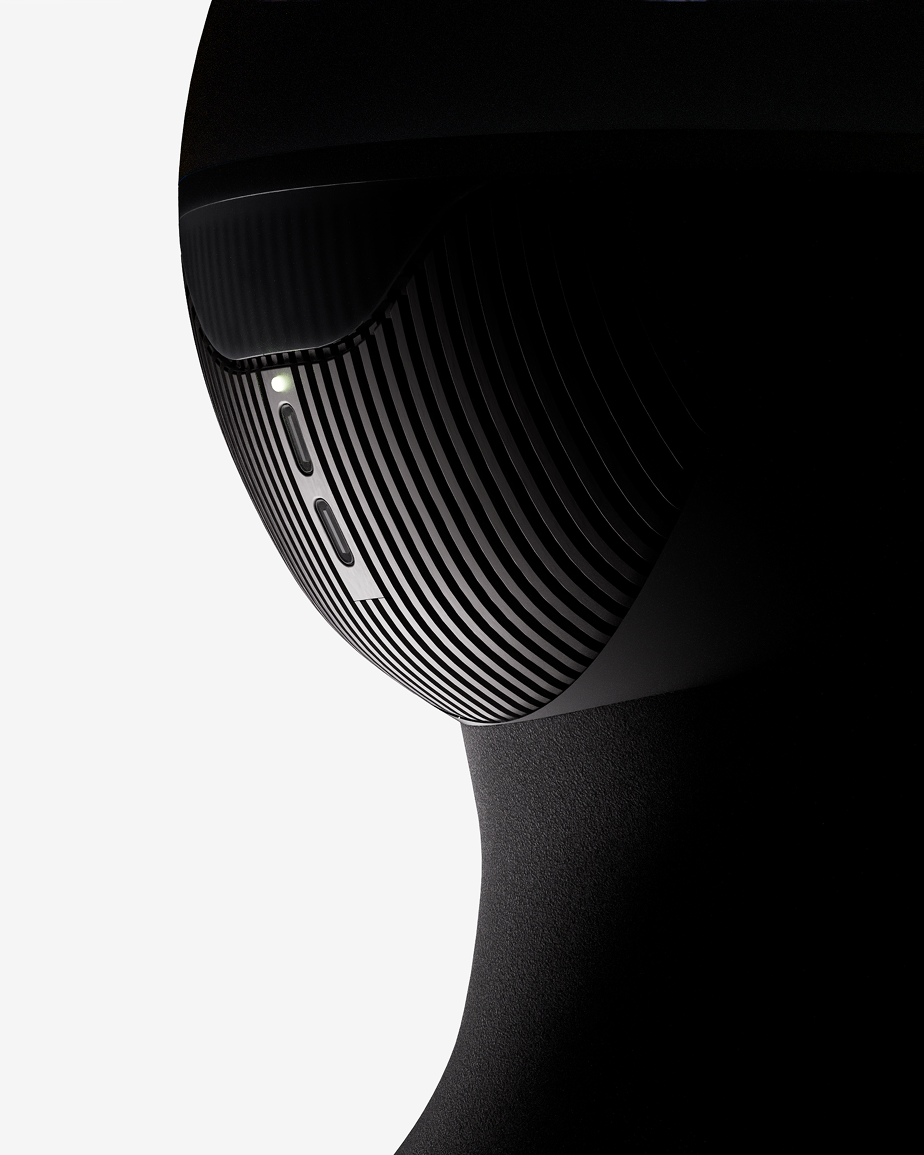
PERCEPTION UNIT

LANGUAGE BEYOND WORDS

We make the robot understandable through multiple modes of communication. Light, displays, sound, movement, and other visual cues work together to communicate its state and intentions. The interface is designed to be intuitive, helping people comprehend what the robot is doing and how to respond, without needing technical knowledge. Especially in critical situations, information needs to be immediate and unmistakable.
PERCEPTION UNIT

TECHNOLOGY, MADE VISIBLE

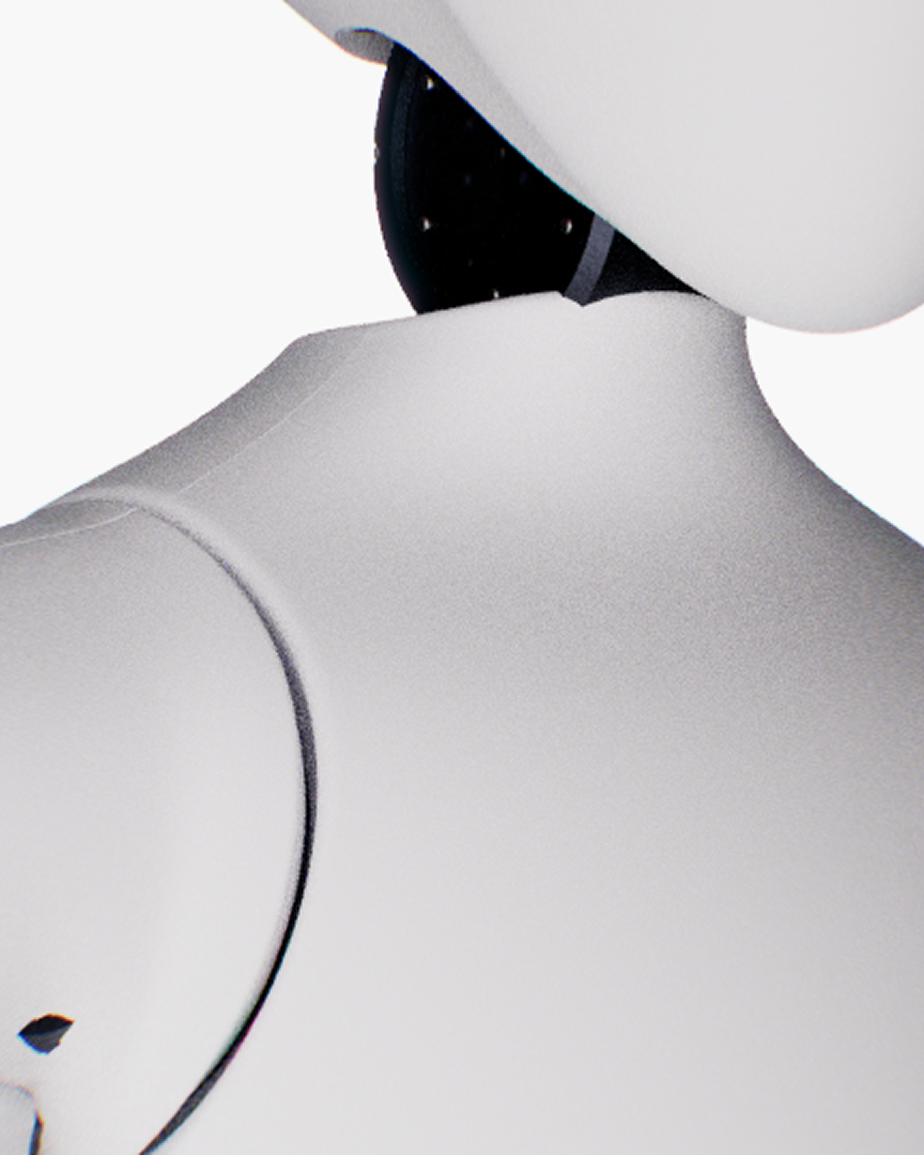
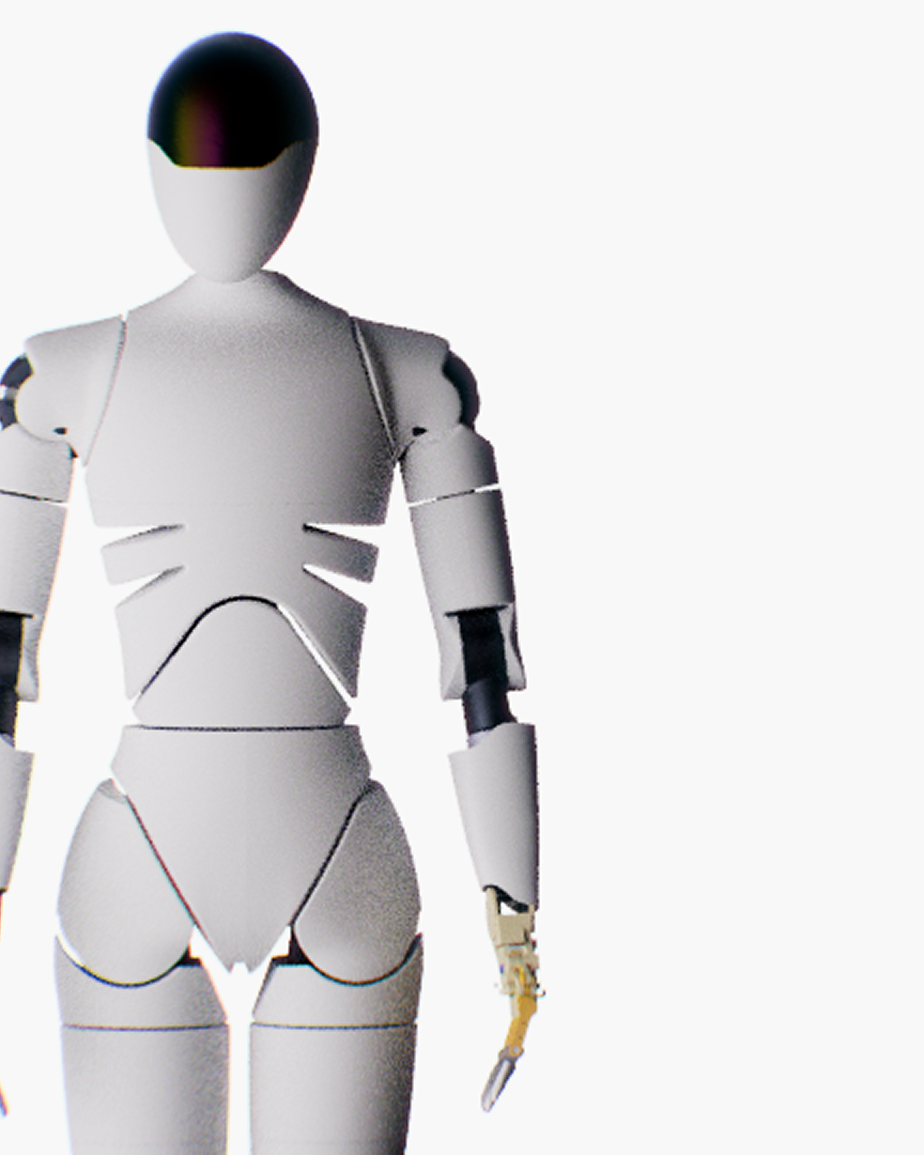
We don’t hide what makes the robot work. Translucent TPU hands and visible technical elements reveal the engineering underneath. Understanding means turning complex technology into something tangible and understandable. They show the mechanisms, materials, and craftsmanship that make the robot possible.

APPROACHABLE BY DESIGN

We design robots to feel familiar, not intimidating. An androgynous body, bright colors, soft textiles, and human-scale proportions create a machine that feels natural to be around. We see robots as partners, not replacements. That means designing for collaboration, creating a robot people can work with, trust, and feel comfortable around.
PERCEPTION UNIT

APPROACHABLE BY DESIGN

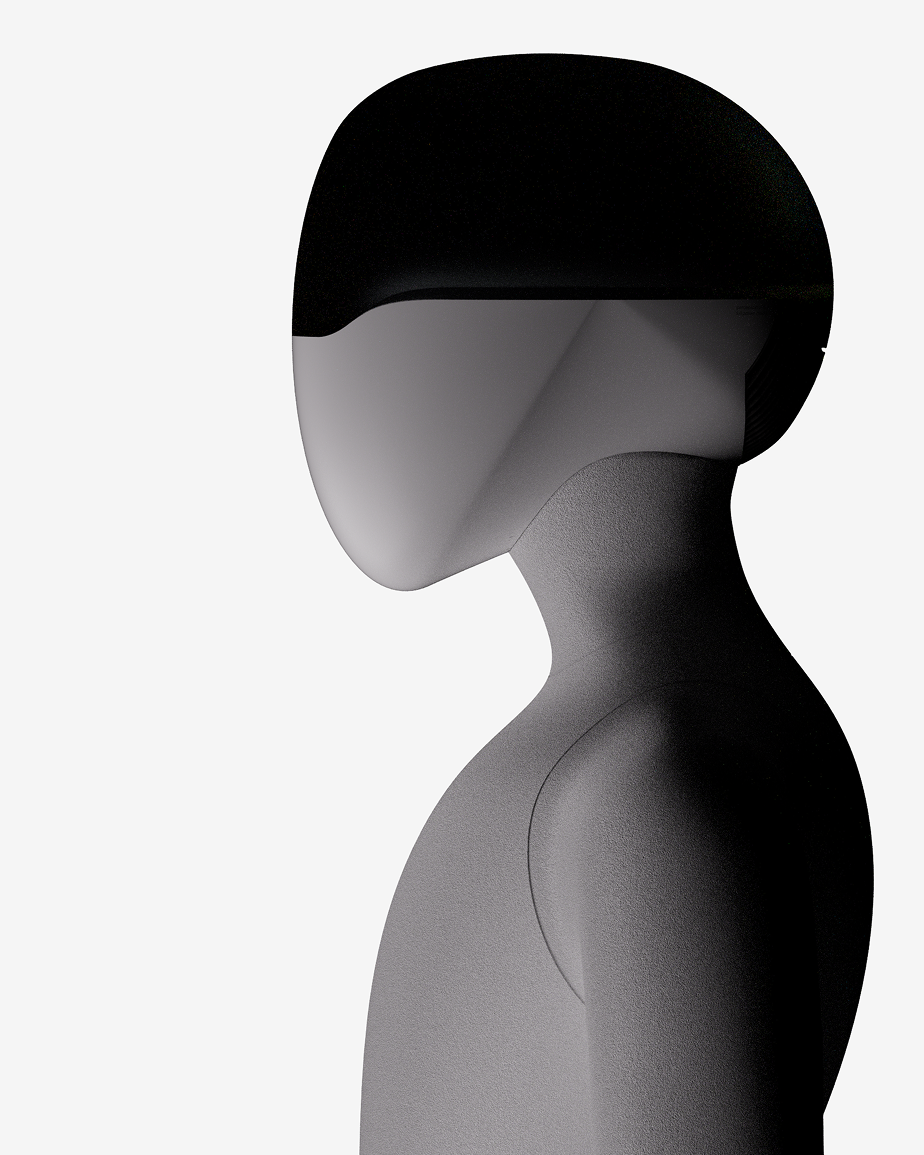
We design robots to feel familiar, not intimidating. An androgynous body, bright colors, soft textiles, and human-scale proportions create a machine that feels natural to be around. We see robots as partners, not replacements. That means designing for collaboration, creating a robot people can work with, trust, and feel comfortable around.
PERCEPTION UNIT

DESIGNED WITH BALANCE

Soft lines, human-inspired forms, and a compact silhouette create a balanced and composed presence. The design feels familiar without becoming overly human, keeping the robot clearly its own. Small details from functional labels to subtle prints add character while remaining purposeful. Every element contributes to a design language that is refined, considered, and soft.
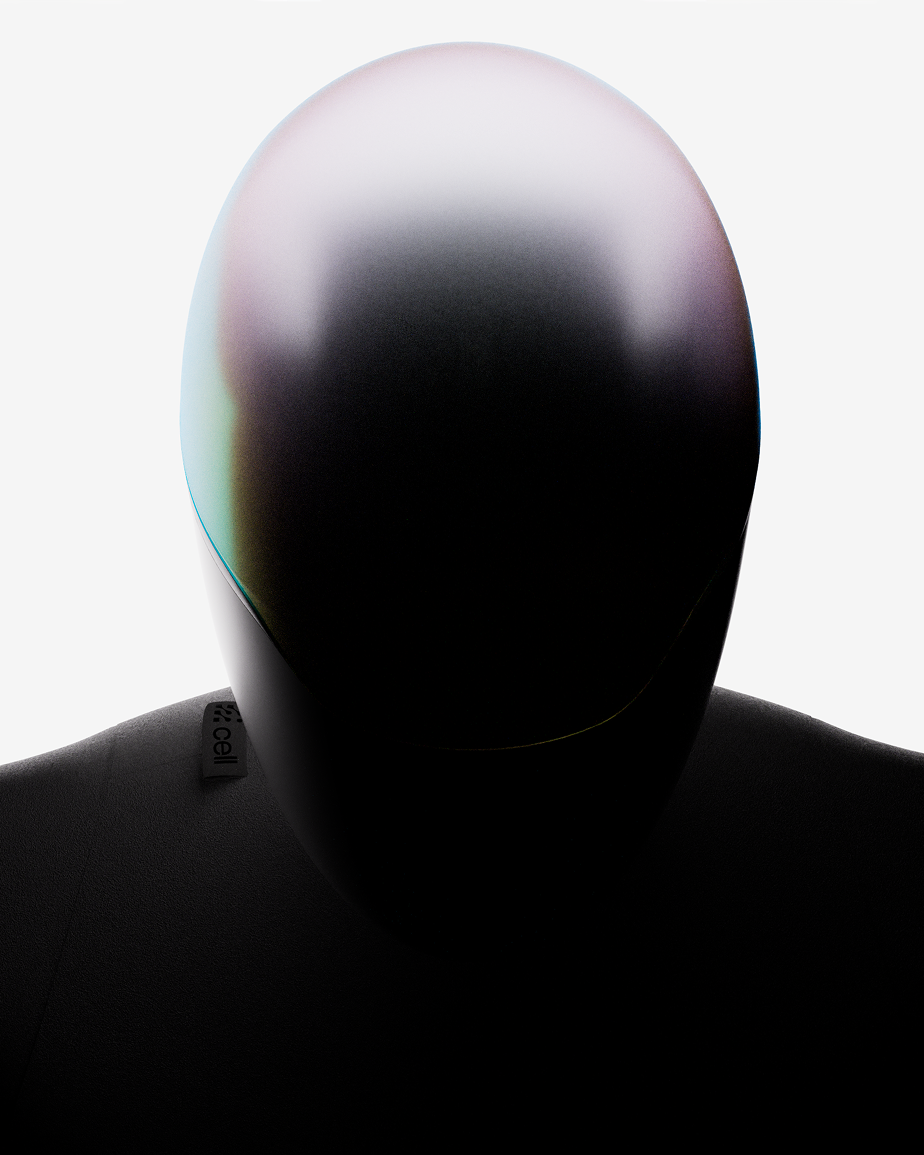
PERCEPTION UNIT
EVERY DESIGN DESICION MATTERS
At the core of every Cell Labs robot lies a custom-designed PCB, engineered for reliability, efficiency,
and the demands of real-world robotics. Every trace, every component placed with purpose.
FIG 01HEAD / PERCEPTION / VISION
(01)
APPROACHABLE BY DESIGN
We design robots to feel familiar, not intimidating. An androgynous body, bright colors, soft textiles, and human-scale proportions create a machine that feels natural to be around. We see robots as partners, not replacements. That means designing for collaboration, creating a robot people can work with, trust, and feel comfortable around.
(02)
PASSIVE SAFETY
From hardware to software, safety is built into the system from the start. A lightweight construction reduces the impact of unexpected falls, while a soft foam layer helps protect people during close interaction. The textile outer layer adds another protective barrier around moving joints and mechanisms.
(03)
DESIGNED FOR CHANGE
A robot should not become obsolete because one part needs to change. We design for longevity through replaceable materials, accessible components, and a system that can be maintained and repaired over time. Recycled materials are used where they make sense, while removable textile layers can be washed, replaced, and renewed.
(04)
DESIGNED WITH BALANCE
Soft lines, human-inspired forms, and a compact silhouette create a balanced and composed presence. The design feels familiar without becoming overly human, keeping the robot clearly its own. Small details from functional labels to subtle prints add character while remaining purposeful.
(05)
LANGUAGE BEYOND WORDS
We make the robot understandable through multiple modes of communication. Light, displays, sound, movement, and other visual cues work together to communicate its state and intentions. The interface is designed to be intuitive, helping people comprehend what the robot is doing and how to respond.
(06)
TECHNOLOGY, MADE VISIBLE
We don’t hide what makes the robot work. Translucent TPU hands and visible technical elements reveal the engineering underneath. Understanding means turning complex technology into something tangible. They show the mechanisms, materials, and craftsmanship that make the robot possible.

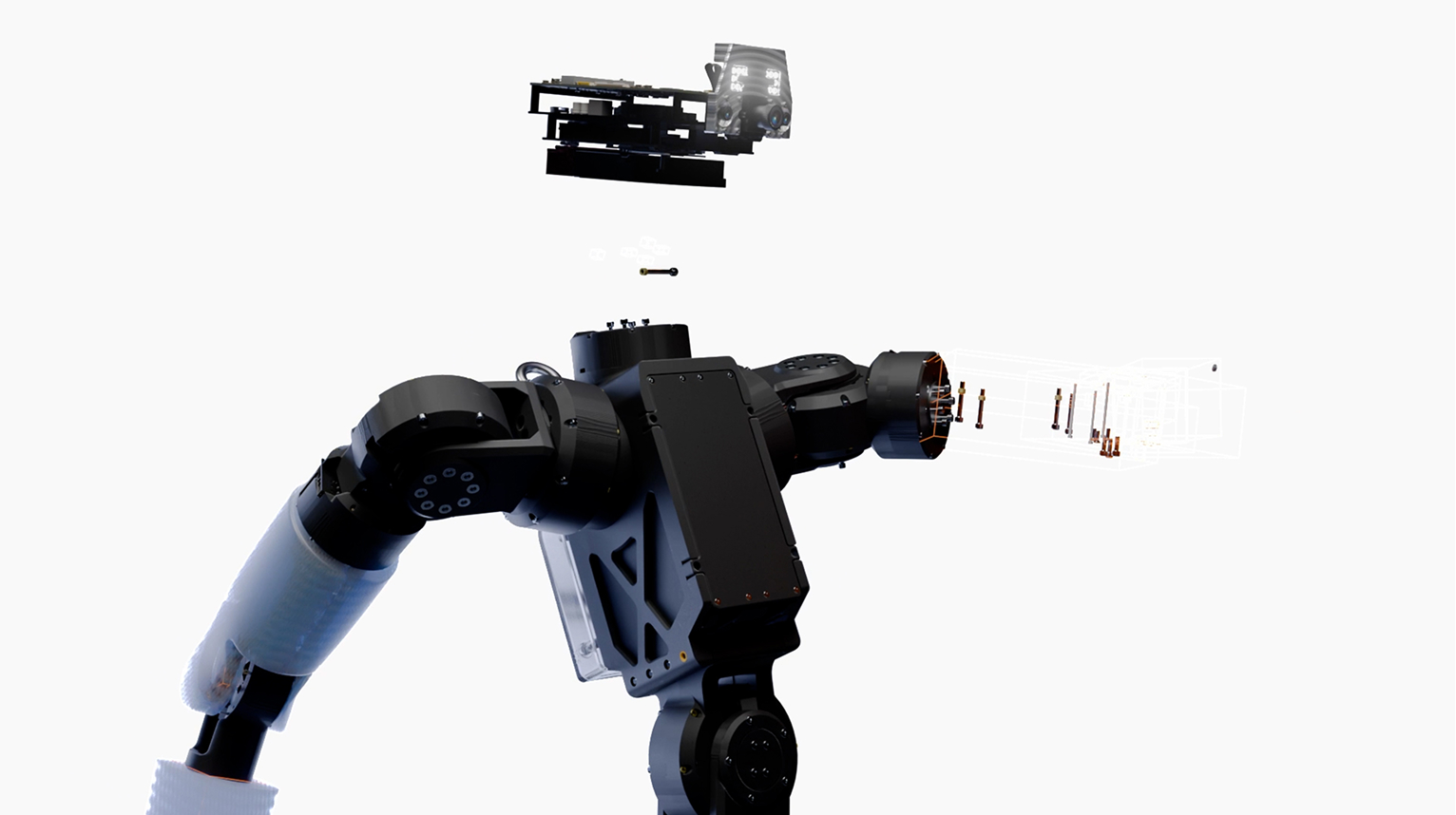
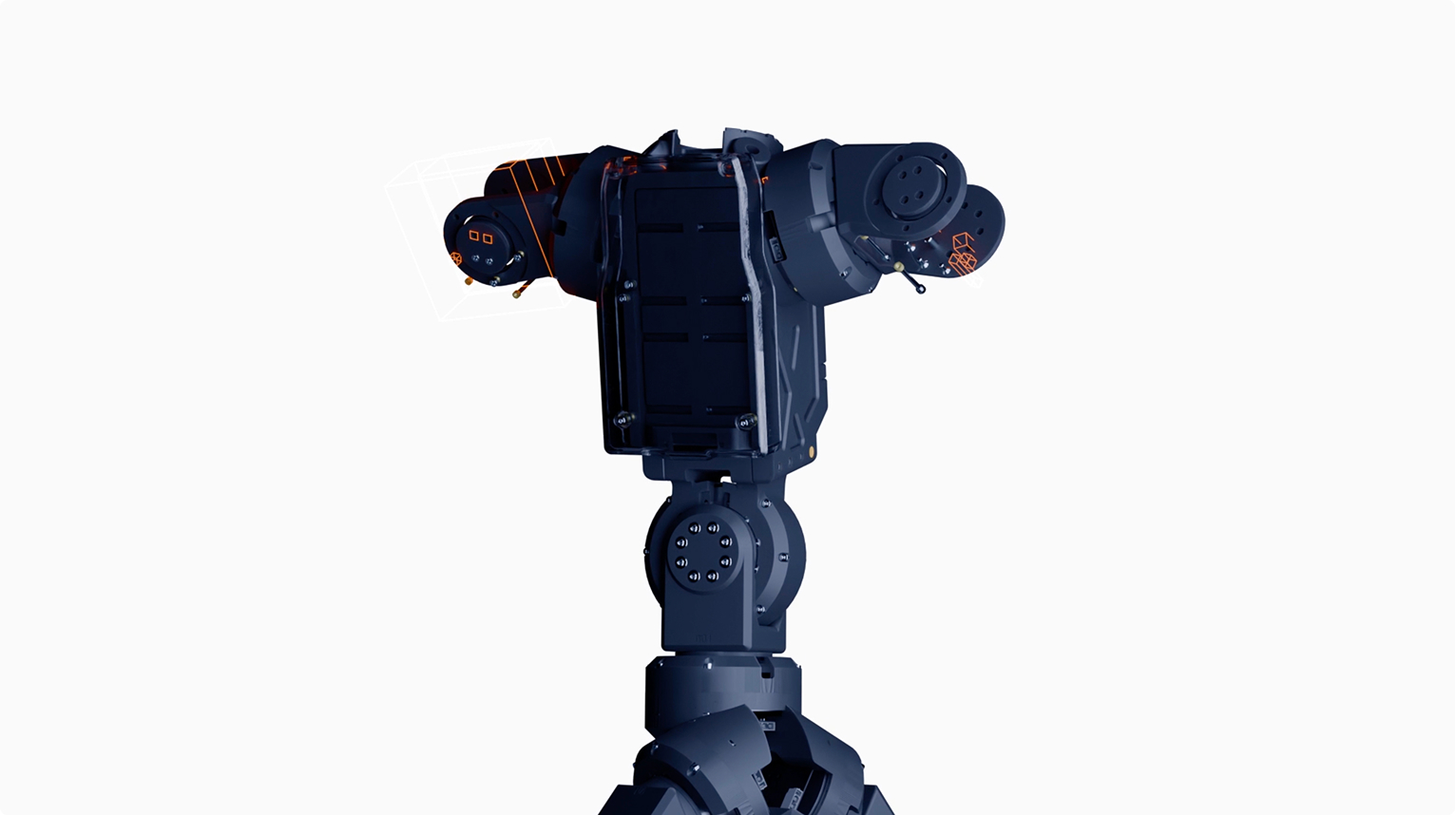
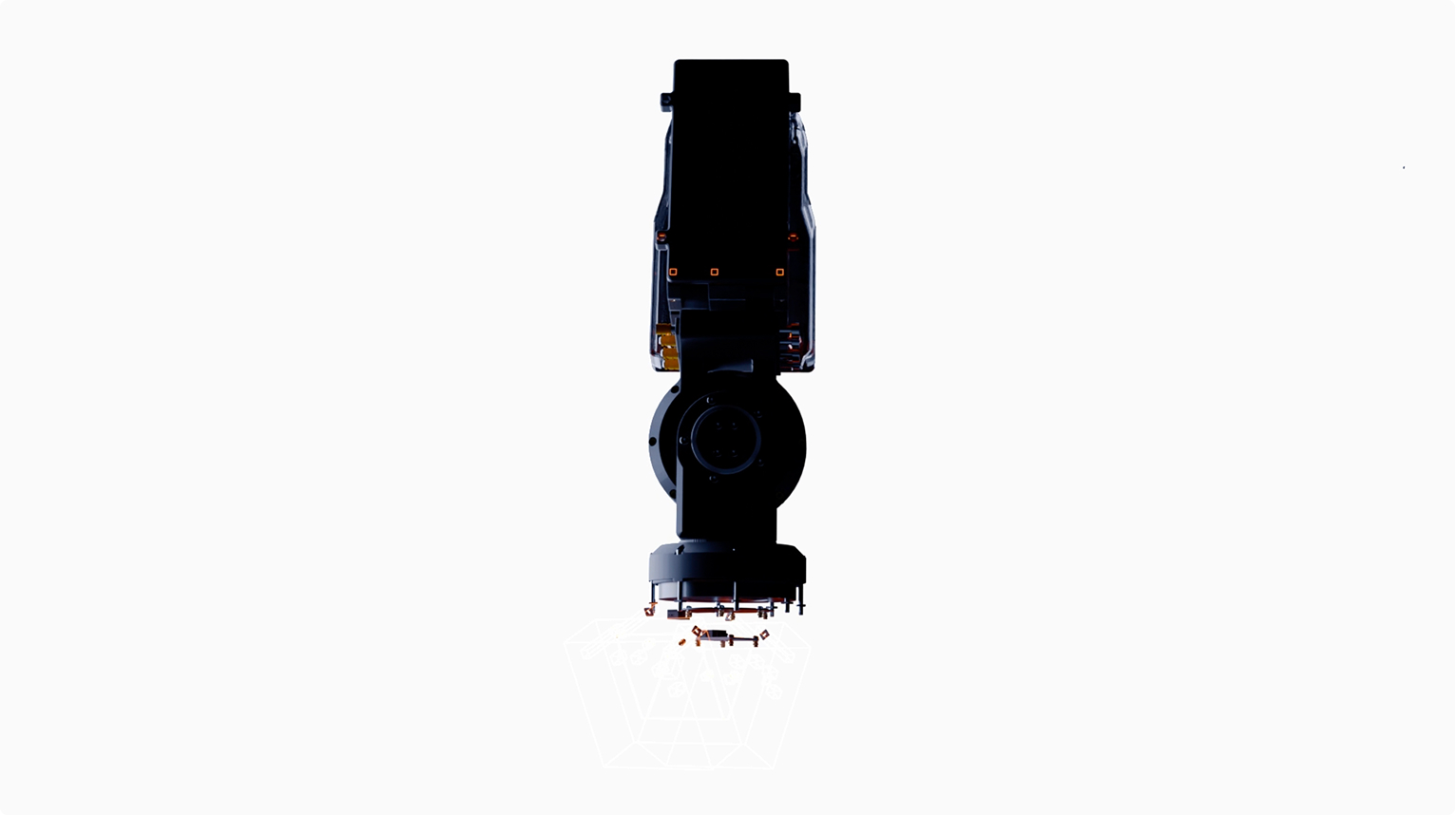
UNDERSTANDING MEANS TAKING IT APART, AND PUTTING IT BACK TOGETHER

built to be
built on
MONO is not a finished product. It is a platform: published interfaces, documented torque envelopes, orderable parts.
So we show it the way we build it, in layers. Each one names what it does and what you can order.
Bild 01 — Platzhalter
Bild 02 — Platzhalter
Bild 03 — Platzhalter
Bild 04 — Platzhalter
Bild 05 — Platzhalter
01textile

Twenty-eight axes, each with its own quasi-direct-drive unit, in-house winding and integrated torque sensing. No harmonic drive anywhere in the arm. Every axis reports its own load, so the control loop reacts to what the body feels instead of what the model predicted.

340 g/m² / 14 panels / 90 s each
02compliance

Twenty-eight axes, each with its own quasi-direct-drive unit, in-house winding and integrated torque sensing. No harmonic drive anywhere in the arm. Every axis reports its own load, so the control loop reacts to what the body feels instead of what the model predicted.

340 g/m² / 14 panels / 90 s each
03structure

Twenty-eight axes, each with its own quasi-direct-drive unit, in-house winding and integrated torque sensing. No harmonic drive anywhere in the arm. Every axis reports its own load, so the control loop reacts to what the body feels instead of what the model predicted.

340 g/m² / 14 panels / 90 s each
04electronics

Twenty-eight axes, each with its own quasi-direct-drive unit, in-house winding and integrated torque sensing. No harmonic drive anywhere in the arm. Every axis reports its own load, so the control loop reacts to what the body feels instead of what the model predicted.

340 g/m² / 14 panels / 90 s each
05actuation

Twenty-eight axes, each with its own quasi-direct-drive unit, in-house winding and integrated torque sensing. No harmonic drive anywhere in the arm. Every axis reports its own load, so the control loop reacts to what the body feels instead of what the model predicted.

340 g/m² / 14 panels / 90 s each
Nothing in the stack is sealed. Run your own perception, your own policies, your own task logic on ours, or take a layer out and replace it entirely. The joints answer to a documented API, not to a black box with a support contract attached.
ALL PURPOSE
ROBOT
02

Inside the shell sits hardware we design ourselves. Power, compute and perception are built as one system, not bought as parts and bolted together. That choice costs time at the start and returns it later. When something fails, we know where to look, because we drew the schematic. When something needs to change, we change it, without waiting on a supplier roadmap. Owning the hardware is what keeps the platform moving.

THIS IS HOW
THE ROBOT SEES.

PERCEPTION UNIT

The full visual sensor suite in a single integrated system. Open interfaces, SDKs and APIs, open where it builds trust, proprietary where it keeps people safe.

[ VALUE ]
[ EXPRESSION ]
High-Resolution RGB Imaging
Color-accurate feedback for teleoperation.
360° Solid-State Depth Sensing
Full-surround spatial awareness.
Long-Range Detection, up to 100 m
Navigation, mapping, early obstacle prediction.
Eye-Safe by IEC Standards
Compliant depth sensing around people.

WE BUILD IT IN-HOUSE.
THIS IS HOW SEES.

PERCEPTION UNIT

The full visual sensor suite in a single integrated system. Open interfaces, SDKs and APIs, open where it builds trust, proprietary where it keeps people safe.

[ VALUE ]
[ EXPRESSION ]
High-Resolution RGB Imaging
Color-accurate feedback for teleoperation.
360° Solid-State Depth Sensing
Full-surround spatial awareness.
Long-Range Detection, up to 100 m
Navigation, mapping, early obstacle prediction.
Eye-Safe by IEC Standards
Compliant depth sensing around people.
03
Built to fit.

Every board here starts as a blank sheet. We place the components, route the signals and decide how power moves through the body. Spine v1.0 carries power, sensing and control on one board, from the first trace to the last pad. Cameras, actuators and compute share one clock, so the robot reacts as one thing instead of many. A board is a set of decisions made visible. Ours are ours to defend.

POWER

OF

LOGIC

BE PART OF THE JOURNEY

Thank you! Your submission has been received!
Oops! Something went wrong while submitting the form.
SPECIFICATIONS
CLOSE
165 CM SIZE5 KG PAYLOAD6 HRS BATTERY2 M/S SPEED30 KG WEIGHT29 DOF1 HR CHARGEBUILT IN BERLIN
SEAT HEIGHT
41 CM
OVERALL HEIGHT
104 CM
SEAT WIDTH
54 CM
OVERALL WIDTH
78 CM
OVERALL DEPTH
86 CM
request info
DESCRIPTION

Mono is a compact, adaptable humanoid robot built to work alongside people. Designed as a full-stack platform, it combines mechanics, hardware, sensing, motion control, design and embodied intelligence in one continuously evolving system. From homes to industry, it adapts to different environments, tasks, and the people around it.

This is our first humanoid robot, built on years of experience in robotics. Every detail reflects what we’ve learned from developing the technology from the inside out.